How to start forex trading for beginners with a clear step-by-step plan
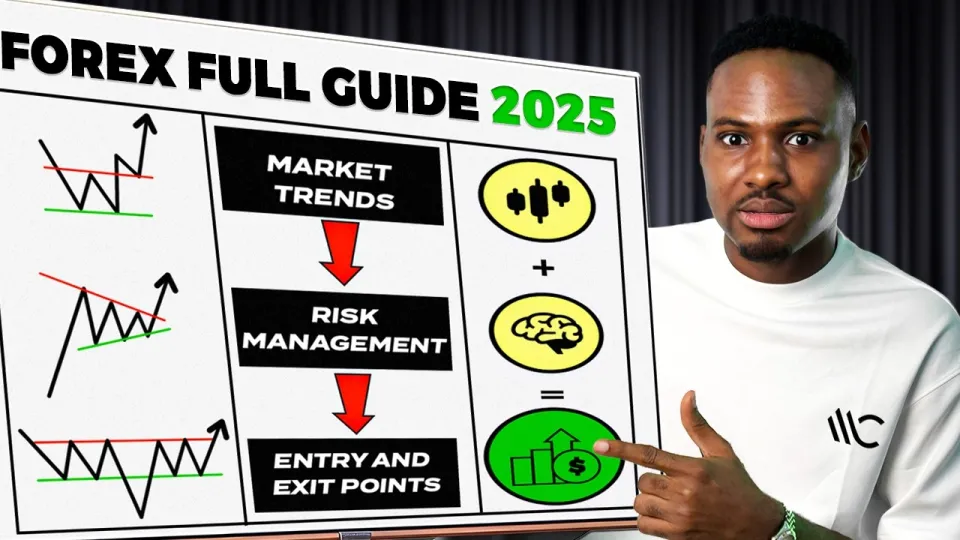
Video: How To Start Forex Trading For Beginners’ 2025 (Full Course)
Want articles like this for your own video to promote it on YouTube and Google? Order them through the Telegram bot @sat_sit_bot. Articles with your video embedded are written and posted by the bot itself — on popular topical sites (no ads). Your first 50 articles are free.
· based on the channel Jeffrey Benson Forex
Key takeaways
- Forex is trading currency pairs over the counter; the most liquid pairs are EUR/USD, USD/JPY, GBP/USD and USD/CHF.
- The market runs 24 hours a day, five days a week across four sessions: Sydney, Tokyo, London and New York.
- A typical beginner setup is a demo account, a charting platform such as MT5, a trading journal and a written risk rule.
- Risk management comes before strategy: many educators cap risk per trade at 1-2% of account equity.
- Jeffrey Benson Forex structures its full beginner course around market basics, tools, a strategy foundation, a first trade and mistakes to avoid.
Forex trading for beginners starts with three decisions: pick a regulated broker, open a demo account on a platform such as MetaTrader 5, and write down a risk rule before you place any trade. You do not need a large deposit or a complex strategy to begin; you need a repeatable process. A structured starting point is the Fire Pips FX student plans page, which the author of the course links as his main entry point for learners.
What forex trading actually is and how the market works
Forex is the exchange of one currency for another, and every trade is a bet on the relative strength of two economies. Currencies are quoted in pairs: the first currency is the base, the second is the quote, and the price tells you how much of the quote currency buys one unit of the base. When you buy EUR/USD, you are long the euro and short the dollar.
Three structural facts shape everything a beginner does:
- It is an over-the-counter market. There is no single exchange; trades flow through a network of banks, brokers and liquidity providers, which is why spreads and execution differ between brokers.
- It trades around the clock on weekdays. Four sessions overlap in sequence — Sydney, Tokyo, London and New York. Liquidity and volatility peak when London and New York overlap, which is why many beginners schedule practice around that window.
- Leverage is built in. Brokers let you control a position larger than your deposit. Leverage magnifies both gains and losses, so position size, not prediction, is the variable that keeps an account alive.
The most heavily traded pairs — EUR/USD, USD/JPY, GBP/USD and USD/CHF — usually carry the tightest spreads, which makes them the natural first instruments for a new trader.
The tools a beginner needs before the first trade
A workable beginner toolkit is small: a broker account, a trading platform, a chart with a few clean indicators, and a journal. Everything else is optional until the basics are automatic.
- A regulated broker. Check the license, the regulator, the spread on EUR/USD, the minimum deposit and the withdrawal process before funding anything. The course author recommends Assex Markets and provides a registration link: https://my.assexmarkets.com/auth/register?partner_code=1699134
- MetaTrader 5 (MT5). The platform handles charts, order types, stop-loss and take-profit levels and a demo account. The course includes a separate walkthrough for linking a broker account to MT5.
- A demo account. Practise order placement and position sizing with virtual money until the mechanics are boring rather than exciting.
- A notebook or trading journal. Record the pair, the reason for entry, the stop level, the result and the emotion. Reviewing twenty logged trades teaches more than watching twenty more videos.
- A news and session calendar. Rate decisions and employment data move currencies violently; knowing when they land prevents surprise losses.
A basic strategy foundation you can build on
A strategy is a written set of conditions that tells you when to enter, where to exit and how much to risk — nothing more. Beginners usually fail not because the idea is wrong but because the rules were never defined in advance.
A simple, testable foundation looks like this:
- Choose one or two pairs. Master EUR/USD before adding anything else; each pair has its own personality and spread profile.
- Pick one timeframe for direction and one for entry. For example, a higher timeframe to identify the trend and a lower timeframe to time the entry, so the two views do not contradict each other.
- Define entry triggers in advance. A trend filter plus a support or resistance level, or a moving-average condition, is enough for a first draft.
- Set the stop-loss before the entry. The stop belongs to the trade idea, not to your comfort level after the position goes against you.
- Backtest on history and then forward-test on demo. Fifty to a hundred logged setups give a rough sense of whether the rules hold up.
Risk management is part of the strategy, not a separate topic. A common guideline among educators is to risk no more than 1-2% of account equity per trade, which means a 1,000-unit account risks 10-20 units on a single idea. That single rule keeps a losing streak survivable.
Placing a first trade without skipping steps
The first live trade should be the same trade you have already placed dozens of times on demo. Open the chart, confirm the session and the news calendar, then work through the order ticket in order.
- Set the instrument and the direction.
- Enter the lot size calculated from your risk rule, not from the maximum the broker allows.
- Attach the stop-loss and take-profit levels before confirming.
- Confirm the position appears with the correct stop and target, then leave it alone.
Most beginners lose money in the first weeks not from bad analysis but from moving stops, doubling position size after a loss and closing winners early. If the trade needs constant intervention, the plan was incomplete.
Common beginner mistakes and how to avoid them
Most early losses come from process errors rather than from a lack of market knowledge. The recurring ones are easy to name and easy to fix.
- Trading without a stop-loss. A single unhedged position can erase weeks of gains; every trade needs a defined invalidation point.
- Over-leveraging. Large lot sizes turn a normal pullback into a margin call.
- Revenge trading. Increasing size immediately after a loss is the fastest route to a blown account; step away and review the journal instead.
- Strategy hopping. Switching systems after three losing trades prevents any method from being tested properly.
- Skipping the demo phase. Live money adds emotion; learn the mechanics first, then add pressure gradually.
- Ignoring the economic calendar. Scheduled data releases can jump the spread and slip stops.
Questions beginners keep asking
Viewers of full beginner courses tend to raise the same concerns: how much capital is needed, how long before results appear, whether signals can replace learning, and how to handle the fear of losing money.
On capital, the honest answer is that the amount matters less than the risk percentage — a small account traded at 1% risk behaves like a large one, just with smaller absolute numbers. On timing, expect weeks of demo practice and journal review before any consistent pattern emerges; anyone promising daily income from day one is selling something. On signals, copying trades can help a beginner observe decision-making, but it does not build the skill of managing a position when the market moves unexpectedly. On fear, the practical fix is smaller size and a written plan: uncertainty shrinks when the next action is already decided.
Useful links from the course
- Student plans and course access: Fire Pips FX plans
- One free signal per day: https://t.me/firepipsignals
- Broker registration used in the course: https://my.assexmarkets.com/auth/register?partner_code=1699134
- Premium signal group access: https://t.me/jeffreybenzhelpbot
Final thoughts
Starting in forex is a sequence, not a leap: understand the pair you trade, set up a demo account on a platform you know, write a risk rule and test one strategy until the results are measurable. The beginner course from the Jeffrey Benson Forex channel follows exactly that order — market basics, tools, strategy foundation, a first trade and the mistakes to avoid — which makes it a sensible reference to work through alongside your own journal. Treat the student plans page as the starting point if you want the structured version, and keep your first months small, logged and boring.
Questions & answers
How much money do I need to start forex trading?
You can open a demo account for free and many brokers accept small live deposits, but the more useful number is your risk per trade. If you risk 1-2% of equity on each position, a small account simply produces smaller absolute results. Start with an amount you can lose without changing your daily life, and increase it only after the process is stable.
How long does it take to become consistently profitable?
There is no fixed timeline, but the sequence is predictable: several weeks of demo practice to learn the platform, then months of journaling and backtesting one strategy. Consistency comes from a tested process, not from a lucky streak. Anyone promising reliable daily income in the first weeks is misrepresenting how the market works.
Can I just copy signals instead of learning to trade?
Copying trades can be a useful observation exercise, and the course offers a free daily signal channel for that purpose. It does not teach you how to size a position, move a stop or react when a trade goes wrong, which are the skills that decide survival. Use signals as a supplement, not a replacement for your own tested rules.
Which currency pair should a beginner trade first?
EUR/USD is the usual starting point because it has the tightest spreads and the deepest liquidity, followed by USD/JPY and GBP/USD. Stick to one pair until entries, exits and position sizing feel routine. Adding more instruments multiplies variables before the first one is understood.
Source: How To Start Forex Trading For Beginners’ 2025 (Full Course) · Markdown version